Twice a year is the answer most of us grew up with, and for plenty of patients it still holds up. But when someone sits in our chair on West Broadway and asks how often they really need to come in, the accurate reply is that it depends on what we see in your mouth, not on the calendar.
Some patients do well with a visit every nine or twelve months. Others, especially anyone with a history of gum disease, need us every three to four months to keep things stable. Below, we explain how a dentist decides your interval, what Canadian guidance says, what BC insurance plans usually cover, and the warning signs that mean you should book before your next recall.
The Quick Answer
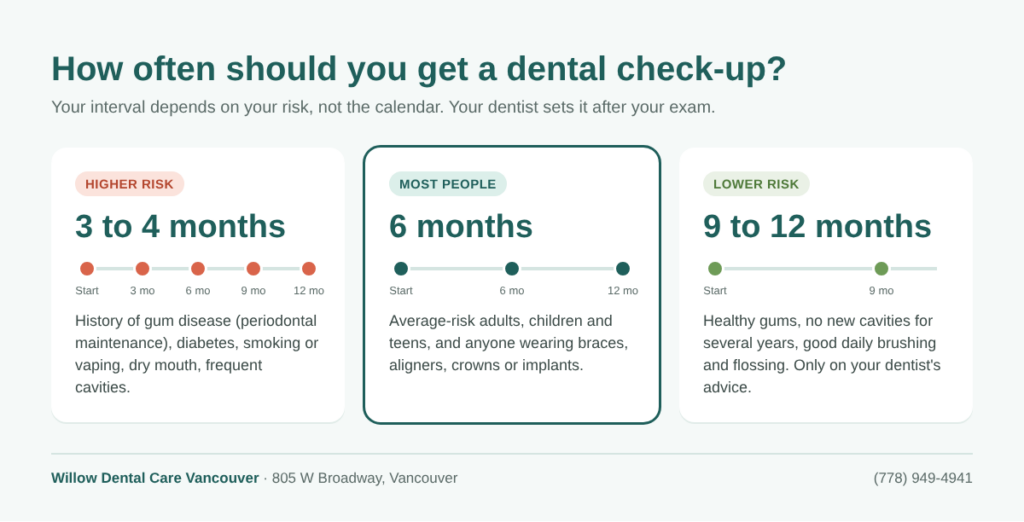
For most adults and children in Vancouver, a dental check-up every six months is a sensible starting point. After your first full exam, your dentist should adjust that interval to match your own risk.
| Your situation | Typical check-up interval |
|---|---|
| Healthy gums, no new cavities in recent years, good home care | Every 9 to 12 months, if your dentist agrees |
| Average risk: the odd cavity or mild gum inflammation | Every 6 months |
| History of gum disease (periodontitis) | Every 3 to 4 months (periodontal maintenance) |
| Frequent cavities, dry mouth, diabetes, smoking or vaping | Every 3 to 6 months |
| Children and teens | Every 6 months, with the first visit by age one |
| Pregnancy | An exam early in pregnancy, plus extra visits if gums bleed |
Where the Six-Month Rule Comes From
The six-month habit took hold long before there was strong research behind it. Today, the Canadian Dental Association’s position is that recall frequency should be based on a risk assessment that looks at cavity risk, gum health, oral cancer screening, growth and development, and your medical history.
Research supports that approach. A 2020 Cochrane review compared six-month check-ups with risk-based and 24-month schedules in adults and found little or no difference in tooth decay or gum disease among the people studied. That does not mean check-ups are optional. Most participants were low-risk adults who were already in regular care. For someone with active gum disease, implants and crowns to monitor, or a habit of sipping sweet coffee all day, a long gap gives small problems time to turn into expensive ones.
In practice, we compare your last two or three visits. If nothing has changed, stretching the interval is reasonable. If we keep finding new decay or deeper gum pockets, we bring you in sooner.
Who Needs a Dental Check-Up More Often
These are the patients we usually see on a shorter schedule:
- A history of periodontitis. Once gum pockets deepen, the bacteria inside them rebuild within roughly three months, so maintenance visits are usually booked every three to four months.
- Diabetes. Gum disease and blood sugar control affect each other, so we keep a closer eye on both.
- Smoking or vaping. Both raise the risk of gum problems and make regular oral cancer screening more important.
- Dry mouth from medication. Many antidepressants, antihistamines and blood pressure drugs reduce saliva, and less saliva means faster decay.
- Braces, clear aligners, crowns, bridges or implants. The edges of dental work and orthodontic attachments trap plaque and need checking.
- Pregnancy. Hormone changes can leave gums swollen and quick to bleed.
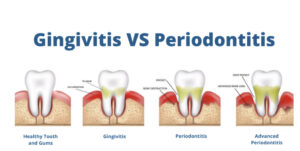
Decay and gum disease often progress together rather than separately, which is one reason we examine the whole mouth at every visit instead of looking at teeth in isolation.
Who Might Be Able to Wait Longer
If you have had no new cavities for several years, your gums measure healthy, you don’t smoke and you floss most days, a nine- or twelve-month recall may be enough. The point is that your dentist makes that call after examining you. Deciding to skip a visit because nothing hurts is a different thing entirely, because most cavities and early gum disease cause no pain until they are well advanced.
According to Statistics Canada, more than one in three Canadians did not see a dental professional in 2022, and about one in four avoided care because of cost. Skipping visits rarely saves money for long, since a small filling caught early costs far less than a root canal or crown later.
What Happens During a Check-Up at Our Vancouver Clinic
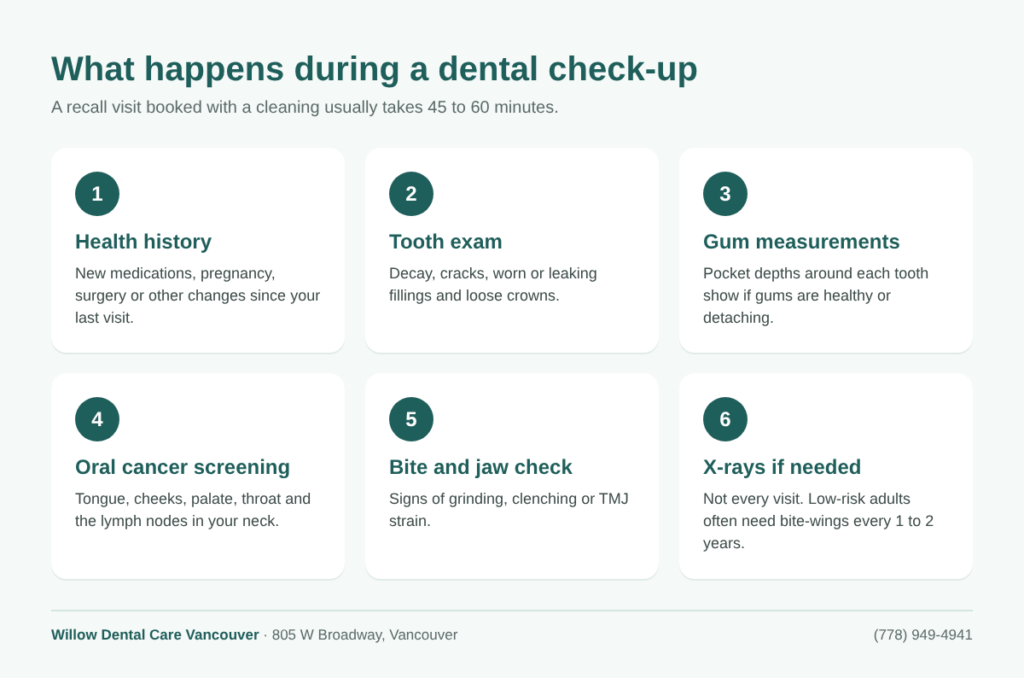
A recall appointment booked together with a cleaning usually takes 45 to 60 minutes. Here is what we check:
- Health history. New medications, pregnancy, recent surgery or other changes.
- Teeth. Decay, cracks, worn or leaking fillings and loose crowns.
- Gums. Pocket measurements that show whether the gum around each tooth is healthy or slowly detaching.
- Oral cancer screening. Tongue, cheeks, palate, throat and the lymph nodes in your neck.
- Bite and jaw. Signs of grinding, clenching or TMJ strain.
- X-rays, only when needed. Low-risk adults don’t need them at every visit. Bite-wing X-rays every one to two years is common.
For a closer look at each step, our page on what happens during a dental exam in Vancouver walks through the visit in more detail.
Not sure when your last check-up was, or whether your interval is right for you? Call our West Broadway clinic at and our team will look up your records, confirm what your insurance covers and find a time that suits you. We offer direct billing to most major insurance providers.
You can also book a dental check-up at our West Broadway clinic through our contact page.
Check-Up and Cleaning: Two Parts of One Visit
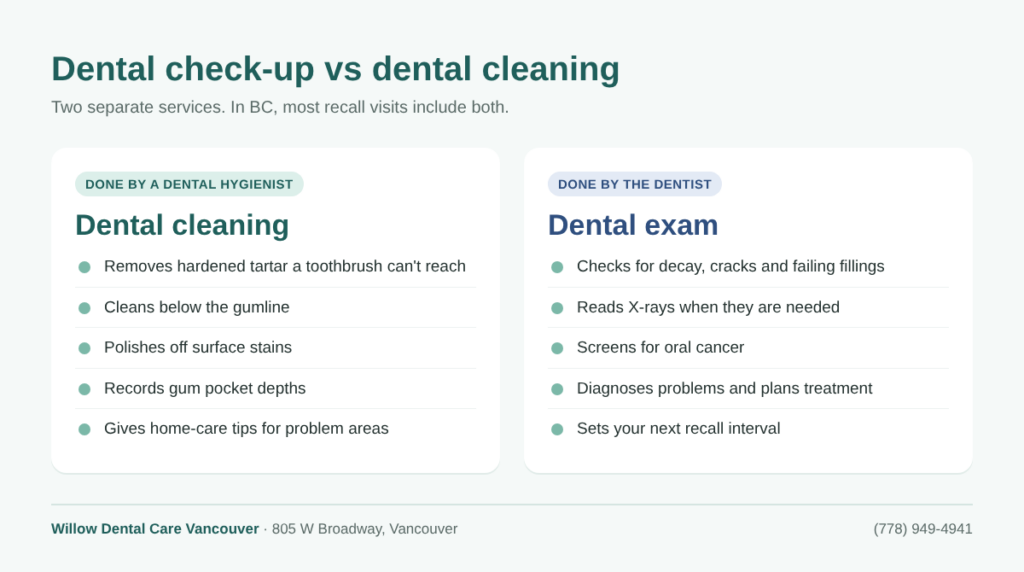
People often use the two words as if they mean the same thing, but they are separate services. The cleaning is usually done by a registered dental hygienist, who removes hardened tartar a toothbrush can’t reach and polishes the teeth. The exam is done by the dentist, who diagnoses problems and plans any treatment. In BC, most recall appointments combine both, and insurers process them as separate items.
Patients with healthy gums usually need a professional dental cleaning in Vancouver on the same schedule as their exam.
If you have been told to come in every three months, this guide explains the difference between periodontal maintenance and a regular dental cleaning.
What BC Insurance Plans Usually Cover
Coverage is often the real reason people ask about timing. Most private plans in BC pay for a recall exam every six months, every nine months or once a year, and cleanings are often capped by units of scaling per year rather than by visits. Two plans from the same insurer can follow different rules, so check your benefits booklet or ask us to check for you.
Under the federal Canadian Dental Care Plan (CDCP), the benefits guide allows one recall exam in any 12-month period, counted on a rolling basis rather than by calendar year. Polishing is limited to half a unit in any 12 months, and scaling limits depend on age. Booking even one day early can lead to a denied claim, so we track your eligibility date and schedule around it.
Don’t Wait for Your Recall If You Notice These
- Gums that bleed when you brush or floss, or look red and puffy
- Sensitivity to hot, cold or sweets that lingers
- A chipped tooth, lost filling or loose crown
- Swelling in the gum or face, or a bad taste that keeps coming back
- A sore, white patch or red patch that hasn’t healed after two weeks
- Jaw pain, clicking or waking up with headaches
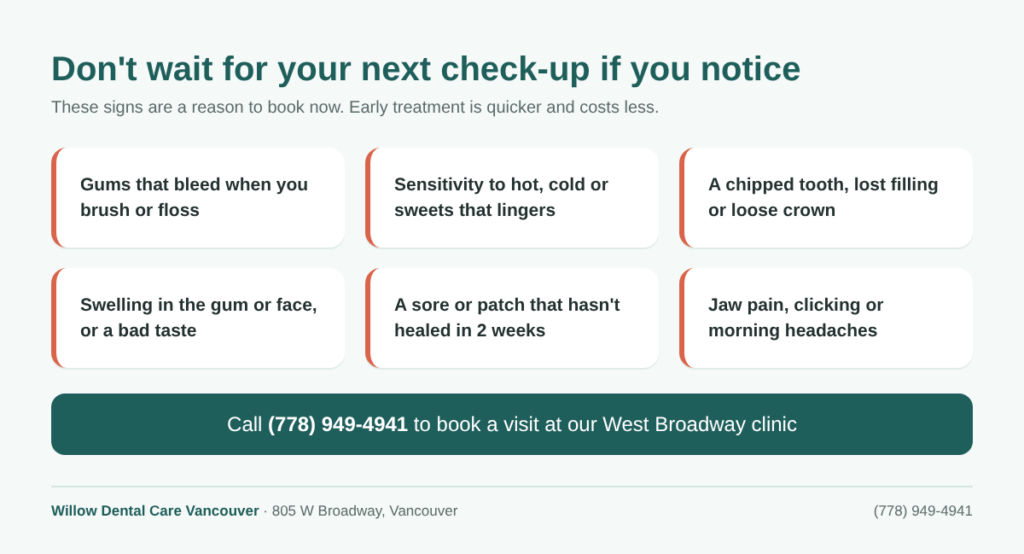
Any of these is a reason to call now. Treating problems early is quicker, more comfortable and less expensive.
Check-Ups for Nervous Patients
Many patients who stretch their check-ups to two or three years are not careless. They are anxious. If that sounds like you, tell us when you book. We keep the first visit short, explain each step before we start and offer sedation for people who need more support.
You can read about the sedation dentistry options available in Vancouver at our clinic, including nitrous oxide and oral sedation.
Frequently Asked Questions
I have no pain. Do I still need a dental check-up?
Yes. Early cavities, gum disease and oral cancer rarely hurt in the early stages. By the time a tooth aches, the problem has usually reached the nerve or the bone.
Is the six-month schedule just an insurance rule?
No. It is a reasonable default for average-risk patients. Insurers set their own limits, and your dentist may recommend a shorter or longer interval based on your exam.
How often should children have a dental check-up?
Every six months for most kids. The Canadian Dental Association recommends a first visit within six months of the first tooth appearing, or by the first birthday. Baby teeth have thinner enamel, so decay spreads faster than in adult teeth.
Parents can also ask about dental sealants for children’s back molars, which protect the chewing surfaces between visits.
Is it safe to get a check-up while pregnant?
Yes, and it is a good idea. Routine exams and cleanings are safe during pregnancy, and pregnancy gingivitis is common. Let us know you are pregnant so we can plan timing and avoid unnecessary X-rays.
Finding the Right Schedule for You
The right interval is the one that keeps your mouth stable from one visit to the next. For most people in Vancouver, that starts at every six months and changes once we know your gums, your cavity history and your overall health. If it has been more than a year since your last exam, book a visit and we will set a schedule that fits you.
Call or visit us at 805 W Broadway, Suite 807, in Fairview, a short walk from Broadway-City Hall Station.
Sources
- Canadian Dental Association: Frequency of Dental Care (position statement)
- Cochrane Review (2020): Recall intervals for oral health in primary care patients
- Government of Canada: Canadian Dental Care Plan Dental Benefits Guide
- Statistics Canada: Dental visits in the previous 12 months, 2022
- Canadian Dental Association: Visit to dentist within baby’s first year